
When you live in a smaller home or apartment, every design choice matters. While furniture and wall colors get most of the attention, the real visual power lies beneath your feet, and sometimes on your walls.
Tiles influence how the eye travels across a space. They guide perspective, control light movement, and shape spatial perception. When selected strategically, tiles can visually stretch walls, raise ceilings, widen narrow rooms, and eliminate the boxed-in feeling many compact homes struggle with.
Let’s explore advanced, design-smart tile techniques that create the illusion of space without knocking down a single wall.
The human eye naturally follows lines.
By adjusting tile direction, you can subtly influence how wide or long a room feels.
Strategic tile orientation changes perception instantly.
Small homes feel smaller when each room looks disconnected.
Instead of changing flooring in every area, maintain visual continuity throughout the home. When tiles flow seamlessly from the living room to the dining space to the hallway, the boundaries dissolve.
This uninterrupted visual journey tricks the brain into reading multiple spaces as one larger environment.
In compact spaces, heavy patterns can fragment visual balance.
Instead of loud designs:
Texture adds dimension without breaking spatial continuity. The space feels layered, not crowded.
Light reflection plays a huge role in spatial perception.
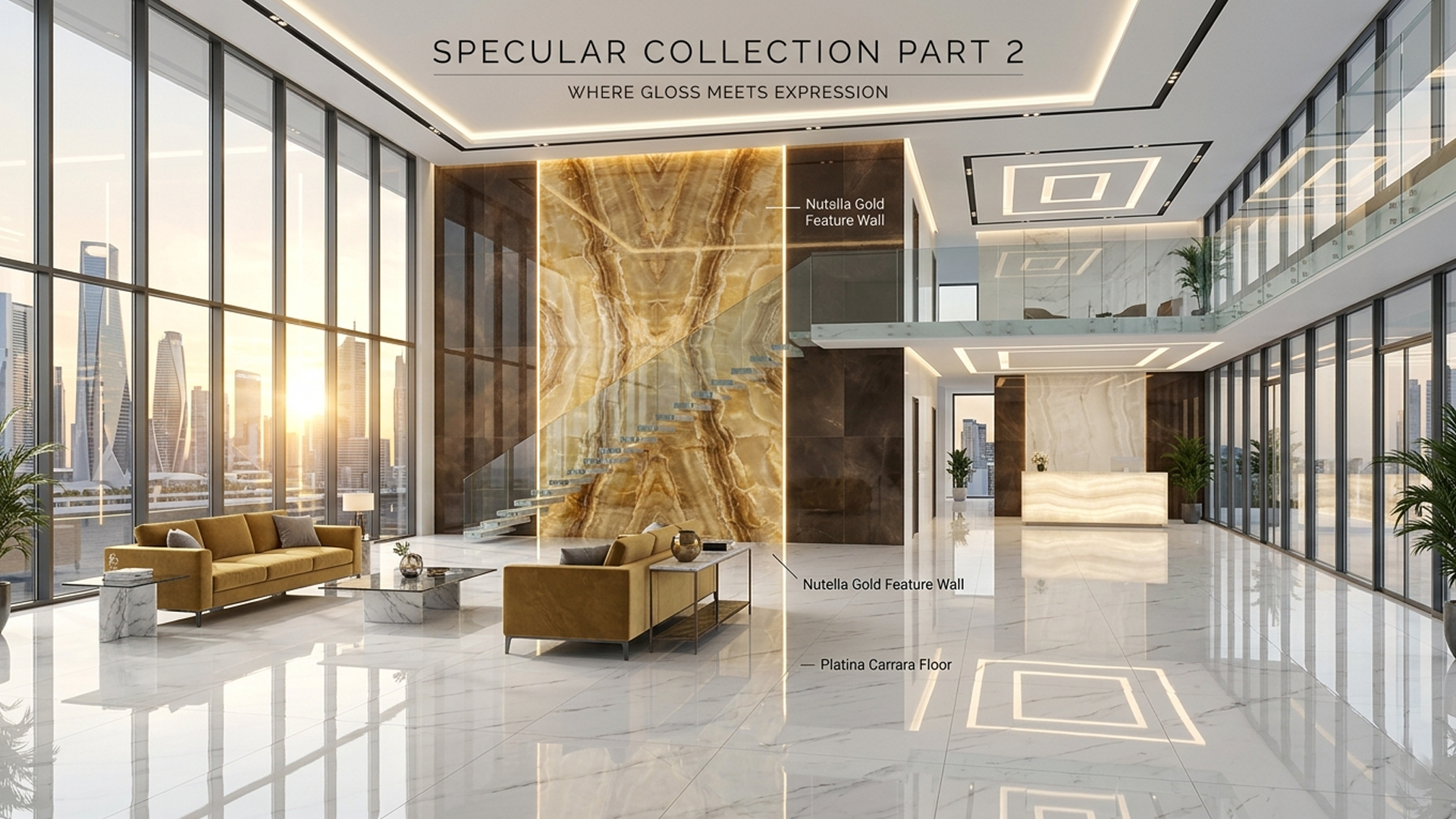
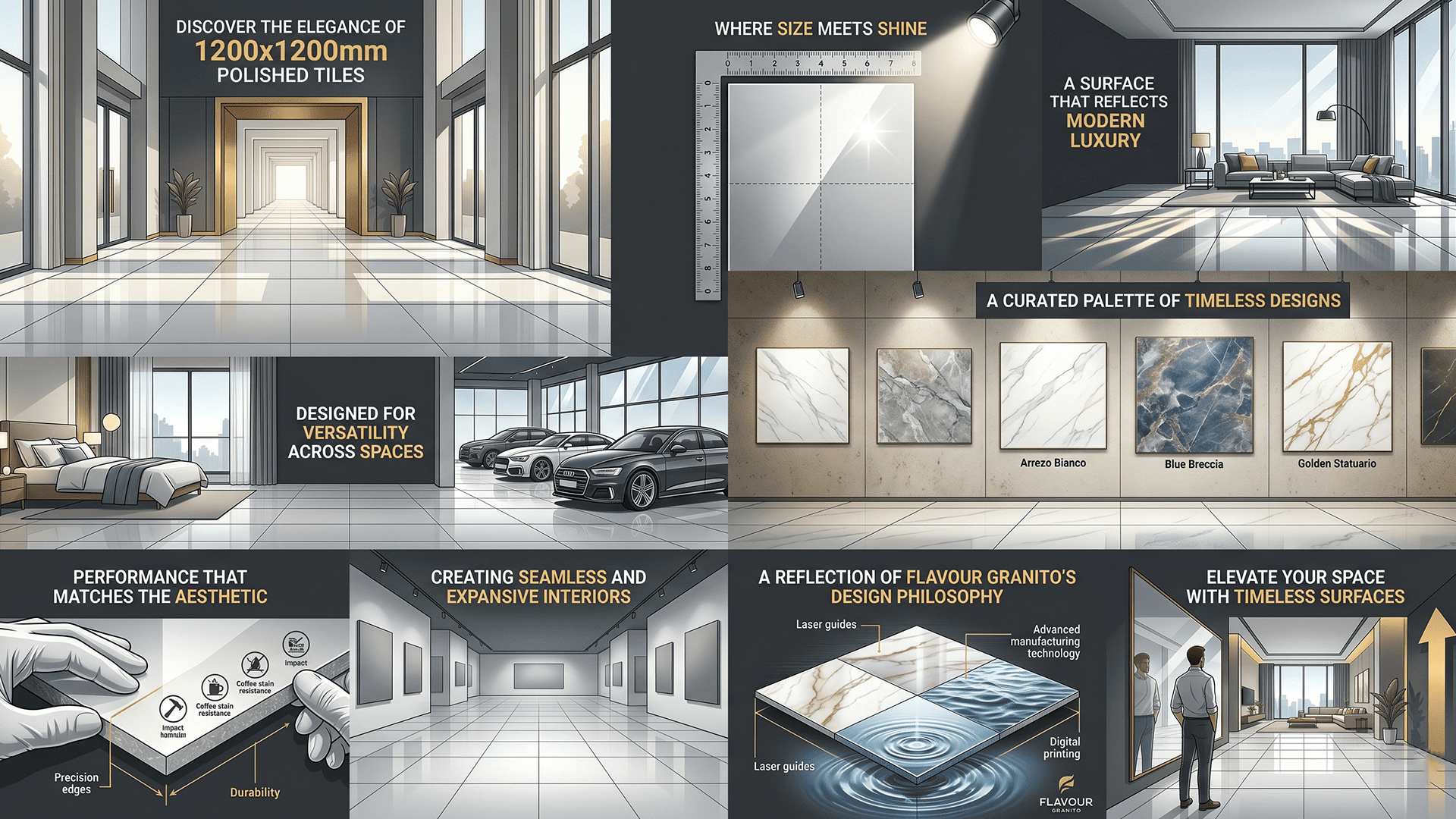
Tiles with a satin or polished surface reflect light gently across the room, enhancing brightness and depth. Even moderate reflectivity can create an airy atmosphere in compact interiors.
Strategic lighting combined with reflective porcelain tiles amplifies this effect.
Door thresholds, balcony separations, and material changes create visual stops.
Using similar tile tones across adjoining areas reduces these interruptions. For example:
When the eye doesn’t “stop,” the room feels larger.
Instead of flat monotone surfaces, consider gentle tonal shifts.
For example:
This layered approach adds dimension without shrinking the room.
In bathrooms and kitchens, extending wall tiles closer to the ceiling eliminates horizontal visual breaks.
The result?
Half-tiled walls often cut the room visually in half. Full-height tiling restores vertical openness.
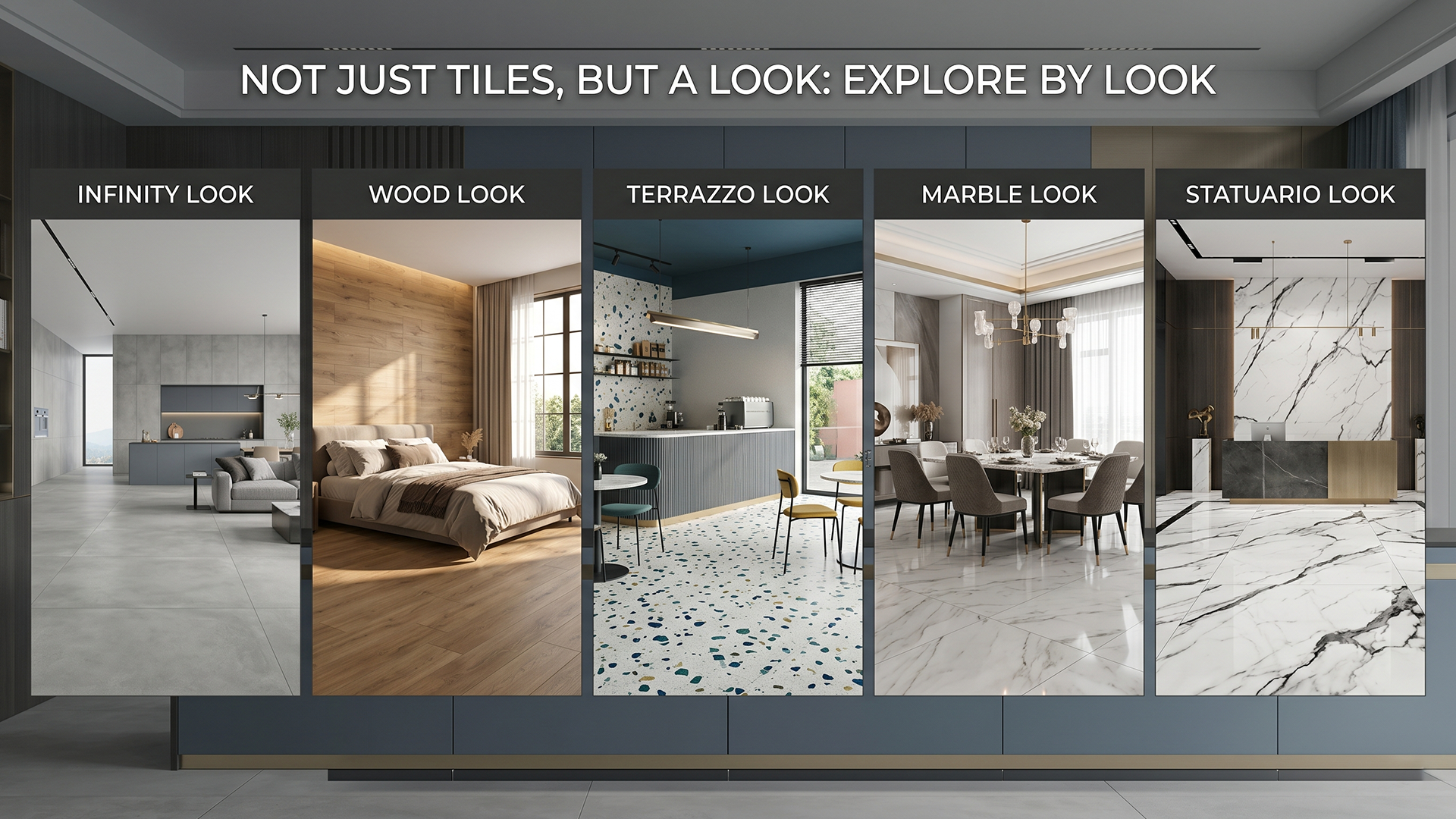
In smaller homes, combining wood in one room, stone in another, and patterned tiles elsewhere can make the layout feel fragmented.
Consistency builds scale. A unified tile palette creates rhythm and harmony, essential for compact spaces.
Sharp contrast borders can shrink rooms.
Instead:
Simplicity enhances perceived size.
If adding a feature wall in a small space, choose one that enhances depth instead of overpowering it.
A subtle textured wall behind a bed or sofa adds character without visually reducing square footage.
The goal is expansion, not distraction.
Tiles are permanent design decisions. Unlike décor, they stay for years.
The right tile choice:
In small homes, tile strategy is not just decoration, it’s spatial engineering.
A home doesn’t need more square feet to feel larger. It needs better visual planning.
With thoughtful tile orientation, tonal balance, surface selection, and layout continuity, even the most compact home can feel open, breathable, and refined.
Tiles are more than surfaces, they shape how your space is experienced.
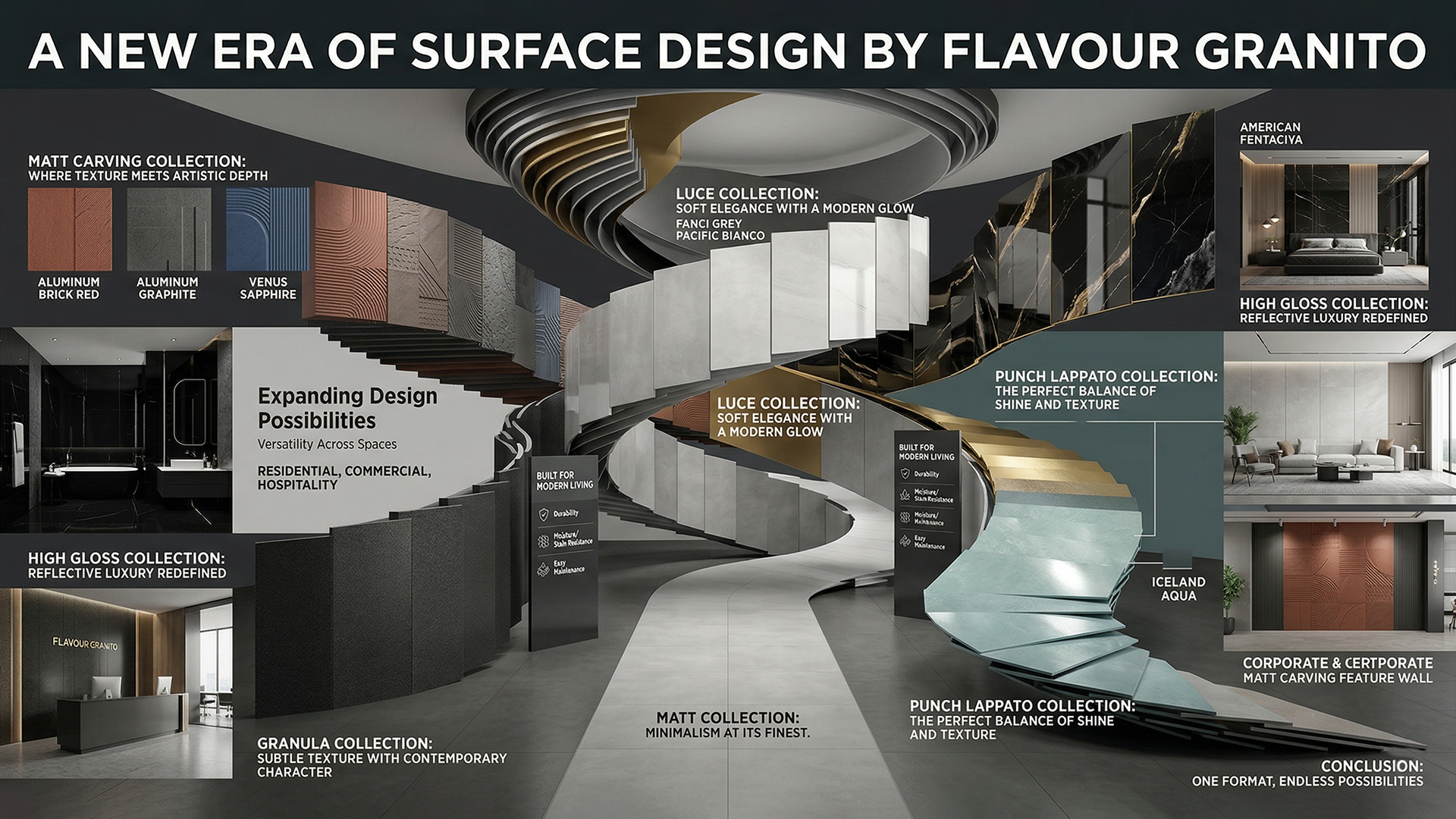
What started 25 years ago in Morbi, India’s ceramic hub, has grown into a trusted global brand. At Flavour Granito, we’ve built our legacy on creating tiles that blend artistry.
Quick Links
Available Sizes
Flavour Granito © . All rights reserved | Design and Managing By Roex Design